The Man They Mocked at My Wedding
My in-laws laughed at my dad at my wedding—they had no idea who he really was.
I was standing in the middle of a five-star ballroom in California, wearing a tux that cost more than my old car, and I still felt like the wrong guy in the wrong movie. I’m Clark, twenty-eight, warehouse worker, and that night was supposed to be my big wedding to Lacy Ellington, the kind of woman whose last name opens doors in this country.
There were over five hundred guests. Politicians. Business owners. Influential people I’d only ever seen on TV. Crystal chandeliers glowed over their heads while they talked about vacations, investments, and new projects. I kept telling myself to breathe and smile, like this was really my life now.
Then I saw my dad.
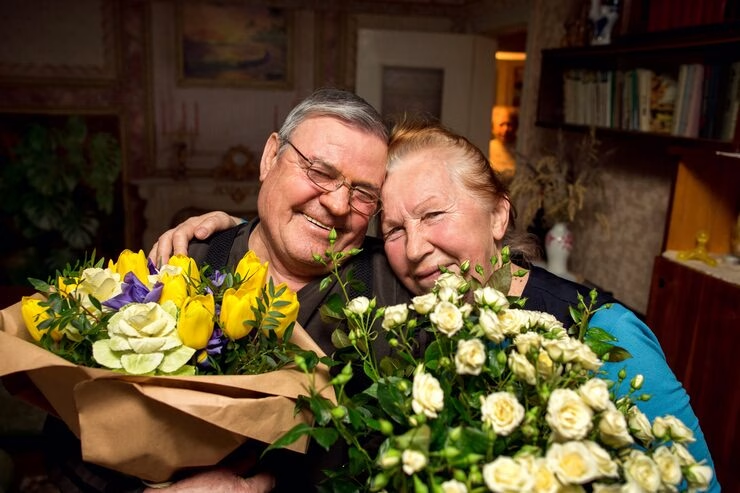
He slipped in through a side door like he didn’t want to bother anyone, wearing the same old suit he’d bought more than ten years ago. His shoes were worn at the edges. His shoulders were a little bent from years of hard work on our small piece of land outside town. He stood near the emergency exit, hands folded, trying to make himself smaller in a room that screamed money.
His eyes, though… his eyes were shining. Proud. A little nervous. This was the man who raised me alone after my mom passed away. The man who worked early mornings and late nights so I could stay in school. Seeing him standing there, so out of place, made my chest tighten.
I was about to walk over and pull him to the front row where he belonged when I heard it.
A laugh. Then another.
A group of guests had turned to look at him.
“Who is that?” one woman whispered, not nearly as quiet as she thought. “He looks like he just walked in from the back road.”
They smiled without smiling. Eyes up and down his suit. A little shake of the head. The kind of look that says everything.
My face burned.
My future father-in-law, Brantley Ellington, glanced over from his circle of important friends. He looked my dad up and down once, frowned like someone had tracked mud across his polished floor, and turned back to his conversation.
My future mother-in-law, Elise, gave this little laugh that never reached her eyes.
“My future in-laws are a little too modest,” she said lightly to the women around her. “I just hope he’s comfortable in a place like this.”
They all laughed. It landed right in my chest.
The Decision
I took a step toward my dad, but Lacy’s fingers closed around my arm.
“Clark, don’t,” she hissed under her breath. “Please don’t make a scene. Today is already stressful enough.”
“That’s my father,” I said quietly.
“I know,” she answered, eyes still on her guests. “Just… let him stay there. We’ll talk to him later.”
Across the room, my dad caught my eye and gave a tiny shake of his head, a small smile that hurt more than anything they’d said.
It’s okay, son. Don’t worry about me.
I wanted to cross that ballroom. I wanted to stand beside him and make everyone see what I saw—a man who’d sacrificed everything for his son, who’d never complained, who’d worked until his hands were rough and his back was bent so I could have opportunities he never had.
But Lacy’s grip on my arm tightened, and I hesitated.
That hesitation cost me.
The Photos
“Family on stage, please!” the photographer called.
The Ellingtons swept forward like they owned the space—which, in a way, they did. Brantley and Elise positioned themselves center stage, flanked by Lacy’s siblings and their perfectly dressed children.
I stood there, suddenly feeling like an accessory in someone else’s family portrait.
“Dad,” I called out, my voice cutting through the chatter. “Come stand with me.”
The room went quiet. Everyone turned to look at my father, still standing by the emergency exit, looking like he wanted to disappear into the wall.
He hesitated, then started across the polished floor, his old shoes making soft, uneven sounds that somehow felt louder than the music.
The Ellingtons shifted almost in sync, just a few inches, just enough to make space without really letting him in.
That’s when Lacy’s younger brother, Trevor, opened his mouth.
He leaned toward his friends and spoke just loud enough for the room to hear.
“Is that really his dad?” he said. “He looks like he took a wrong turn on the way past the service entrance.”
A few guys snorted. Someone actually clapped him on the back, like it was the funniest line of the night.
Even Lacy’s shoulders shook with a quick laugh she tried to swallow.
My dad froze for half a second, then forced a smile and kept walking toward me. But I saw the way his jaw tightened. I saw the flash of pain he tried to hide.
And something in me snapped.
I dropped the bouquet. It hit the floor with a crack that sliced through the music.
“I’m calling off the wedding,” I said.
The Eruption
For a moment, no one moved. No one breathed. The whole room felt like it tilted.
Then the noise hit all at once.
Lacy spun toward me, her face white, then bright red.
“Clark, what are you doing?” she cried. “You can’t say that. Not here. Not now.”
Her father’s voice boomed over hers.
“Apologize,” he ordered, his face purple with rage. “You are not going to embarrass this family tonight.”
“Embarrass?” I repeated, my voice rising. “You just let your son mock my father in front of five hundred people and you’re worried about embarrassment?”
Brantley stepped forward, his finger jabbing the air between us. “That’s different. Your father—”
“My father what?” I cut him off. “My father worked his whole life to give me opportunities I never earned. My father raised me alone after my mother died. My father is the best man I know, and you all just treated him like he’s beneath you.”
Elise’s voice was sharp, cutting. “Clark, you’re being dramatic. Trevor was just joking—”
“It wasn’t a joke,” I said. “And if it was, it wasn’t funny.”
People were standing now. Phones were coming out. My last name, my job, my clothes—everything about me was suddenly on trial in front of five hundred strangers.
Right then, my dad stepped up beside me. His hand found my arm, light but steady.
“Son,” he said quietly, “I’m sorry. Me being here only made things harder. Don’t throw your future away because of me. I’ve had worse nights. I’ll be fine.”
I looked at him—the same old suit, the same tired hands, the same man who never once walked away from me.
“No,” I said. “I’m done pretending I belong in a world that treats good people like garbage because they don’t have the right clothes or the right connections.”
I turned to Lacy. “I love you. Or I thought I did. But I can’t marry into a family that thinks my father isn’t good enough to stand on the same stage as them.”
“Clark, please,” Lacy’s voice broke. “Don’t do this. We can work this out.”
“How?” I asked. “Are you going to tell your brother to apologize? Are you going to stand up to your parents and tell them they were wrong?”
She opened her mouth, then closed it. She looked at her family, then back at me.
And in that moment, I had my answer.
“You can say whatever you want about me,” I said, my voice shaking but finally loud enough to carry. “I’ll take it. But you don’t get to treat my dad like he doesn’t matter. Not tonight. Not ever.”
I took his hand in front of everyone.
We walked off that stage together, down the center aisle, past the chandeliers, past the stares, past the shocked whispers.
Behind us, I heard Brantley’s voice: “Good riddance. I knew he was a mistake.”
We left the hotel, stepped into the cool California night, and drove back to the small house where I’d grown up.
The tux didn’t fit there, but my heart did.
The Truth Comes Out
Later, sitting in front of the old fireplace, my dad watched the flames for a long time before he turned to me.
“Clark,” he said slowly, “there’s something I should have told you a long time ago. I’m not exactly the simple farmer you think I am.”
I looked at him, confused. “What do you mean?”
He stood up and walked to the old desk in the corner—the one that had been locked for as long as I could remember. He pulled out a key from his pocket and opened the bottom drawer.
Inside were folders. Documents. Photographs.
He brought them to the coffee table and spread them out in front of me.
“Your mother and I,” he began, “we didn’t start with nothing. We had something. A lot of something, actually.”
I stared at the documents. Property deeds. Stock certificates. Bank statements with numbers that didn’t make sense.
“I don’t understand,” I said.
“We were wealthy, Clark. Very wealthy. Your mother came from money—old money, the kind that doesn’t need to prove itself. When we got married, we merged our resources and built an investment portfolio that grew faster than we ever expected.”
“Then why—” I gestured at the small house, the worn furniture, the life I’d always known. “Why did we live like this?”
“Your mother got sick,” he said quietly. “Cancer. We spent everything trying to save her—experimental treatments, specialists, trips to hospitals across the country. When she died, I’d burned through most of our liquid assets. But I still had the investments, the properties. I could have liquidated them, moved us somewhere fancy, lived like the Ellingtons do.”
He paused, staring into the fire.
“But I didn’t want that for you. I’d seen what that kind of wealth did to people—how it made them think they were better than everyone else, how it isolated them from reality. I wanted you to grow up understanding the value of work, of humility, of treating people with respect regardless of their bank account.”
“So you pretended to be poor,” I said slowly.
“Not poor. Just… ordinary. I worked the land because I wanted to teach you that honest work has dignity. I wore old clothes because I didn’t need new ones. I lived simply because that’s what felt right after your mother died.”
He handed me a folder. “But I never stopped managing our investments. I never stopped building. The difference is, I did it quietly. No one knew. Not the neighbors, not the town, not even you.”
I opened the folder. Inside were holdings in companies I recognized—major corporations, tech startups that had gone public, real estate developments across three states.
“How much?” I asked.
“Combined net worth? About forty million dollars.”
The number didn’t feel real. I looked around the small living room, at the worn couch and the old TV, and tried to reconcile what I was seeing in these documents with the life I’d always known.
“Why are you telling me this now?” I asked.
“Because you just walked away from wealth and status to defend me,” he said. “You chose your values over your comfort. And I think you’re finally ready to understand why I made the same choice twenty years ago.”
The Phone Call
That’s when my phone rang.
It was Lacy.
I almost didn’t answer, but my dad nodded at me. “Might as well hear what she has to say.”
I picked up. “Hello?”
“Clark.” Her voice was thick with tears. “Please come back. We can fix this. My parents are willing to apologize—”
“Are they calling me?” I asked. “Or did they tell you to call?”
Silence.
“That’s what I thought,” I said.
“Clark, I’m sorry. I should have stood up for you. I should have defended your father. I was just… I was scared of what they’d think, what everyone would think.”
“Lacy,” I said quietly, “do you even know my father’s name?”
Another pause.
“Of course I do. It’s… it’s…”
She didn’t know. We’d been together for two years, engaged for six months, planning a wedding for the past year, and she didn’t know my father’s first name.
“His name is Thomas,” I said. “Thomas Mitchell. He raised me alone after my mother died when I was eight. He worked every day to make sure I had food, clothes, and an education. He taught me that character matters more than status. And tonight, your family treated him like he was trash.”
“I know. I’m sorry. Please—”
“Do you love me, Lacy? Or do you love the idea of me? The project you could polish up and present to your parents?”
“That’s not fair—”
“Answer the question.”
She was crying now. “I do love you. But Clark, you have to understand, my family… they have expectations. There are standards—”
“And your standards include mocking a good man for wearing an old suit.”
“That’s not what I meant—”
“Yes, it is,” I said. “That’s exactly what you meant. Your family’s standards don’t include people like my dad. People who work with their hands. People who don’t know which fork to use at a seven-course dinner. People who are more concerned with being good than being seen as good.”
“So that’s it?” Her voice turned cold. “You’re just going to throw away everything we built?”
“What did we build, Lacy? A relationship where I had to pretend to be someone I’m not? Where my father had to hide in the back of the room because he didn’t fit your aesthetic?”
“You’re being cruel.”
“No,” I said. “I’m being honest. For the first time in two years, I’m being completely honest. And you know what? It feels better than any moment we’ve shared in that ballroom.”
I hung up.
My father was watching me with an expression I couldn’t quite read.
“You okay, son?” he asked.
“Yeah,” I said, surprised to find it was true. “Yeah, I think I am.”
The Next Morning
The next morning, my phone wouldn’t stop buzzing.
Text messages. Voicemails. Emails.
Some were from Lacy, begging me to reconsider. Some were from her family, ranging from apologetic to threatening. A few were from friends who’d been at the wedding, expressing shock or support depending on whose side they were on.
And one was from a number I didn’t recognize.
I opened it.
Mr. Mitchell, this is Gregory Haines from Haines & Associates. Your father has been a client of ours for many years. He mentioned you might be in need of legal counsel regarding the termination of your wedding contract. Please call at your earliest convenience.
I showed it to my dad.
He smiled. “I called Gregory this morning. The Ellingtons are going to try to sue you for the wedding costs. They already sent their lawyer a retainer.”
“How much are we talking?”
“Quarter million, give or take. They went all out.”
My stomach dropped. “Dad, I don’t have that kind of money.”
“I know,” he said. “But I do. And more importantly, Gregory is very good at his job. The Ellingtons signed a contract that includes a clause about conduct. If we can prove they created a hostile environment—which we can, thanks to the hundred phones that were recording tonight—their case falls apart.”
“You’ve been planning this?”
“Not planning. Preparing. I didn’t think you’d actually walk out—I’m proud as hell that you did—but I knew the Ellingtons well enough to know they’d try to squeeze money out of anyone they perceived as beneath them.”
I sat down, processing everything. “How long have you known about them?”
“I did my research when you started dating Lacy. Ran background checks, looked into their business dealings, talked to people who’d worked with them. The Ellingtons are old money built on new debt. They’re leveraged to their eyeballs, maintaining an appearance they can barely afford.”
He pulled out another folder. “Brantley’s real estate company is underwater. Three of his major developments have stalled due to lack of funding. He owes contractors, suppliers, and banks. The only reason he’s still operating is because of his reputation—people assume he’s wealthy, so they keep extending him credit.”
“So this wedding…”
“Was supposed to be his comeback,” Dad finished. “Show the world he’s still on top, still connected, still relevant. Your walking out didn’t just embarrass him personally. It damaged his carefully constructed image.”
“Which is why he’s going to come after me hard.”
“He’s going to try,” Dad said. “But Gregory is better. And we have something Brantley doesn’t.”
“What’s that?”
“The truth. And the money to fight.”
The Lawsuit
The lawsuit came three days later.
Brantley Ellington was suing me for breach of contract, emotional distress, reputational damage, and loss of business opportunities. The total amount: $850,000.
The attached documents listed every expense from the wedding, every “opportunity” Brantley claimed to have lost because of my “unprofessional behavior,” and testimonies from guests describing how “traumatized” they were by the scene I’d caused.
It was absurd. It was also very real.
Gregory Haines reviewed everything in his office while my dad and I sat across from him.
“They’re reaching,” Gregory said, tapping the papers with his pen. “But they’re not stupid. They know you don’t have the money to fight this, so they’re betting you’ll settle. Probably offer to drop the suit for a hundred thousand, which is still enough to ruin you financially but small enough that you might be able to scrape it together.”
“What if we fight?” I asked.
“Then we countersue for defamation, harassment, and intentional infliction of emotional distress. We have video evidence of Trevor’s comment, witness testimony about how your father was treated, and Lacy’s own admission over the phone that her family has ‘standards’ that exclude people like your father.”
He leaned back. “The problem is, legal battles take time and money. Even if we win, you’ll spend months in court and tens of thousands in legal fees.”
“Unless,” my father said quietly, “we make them an offer they can’t refuse.”
Gregory and I both looked at him.
Dad pulled out his phone and made a call.
“Martin? It’s Thomas Mitchell. I need you to do something for me.”
He gave instructions I didn’t fully understand—something about holdings, leverage, and pressure points.
When he hung up, he looked at me. “Brantley’s company is about to have a very bad week.”
The Pressure
It started on Monday.
Three of Brantley’s major creditors suddenly demanded immediate payment on outstanding loans. His line of credit at two banks was frozen pending review. A story appeared in a local business journal about “troubled real estate developments” in his portfolio.
By Wednesday, two of his biggest investors had pulled out of upcoming projects.
By Friday, he was facing bankruptcy.
I didn’t understand how it happened until my father explained it over dinner.
“I made some calls,” he said simply. “To people I’ve invested with over the years. People who owe me favors. I explained the situation—how Brantley was trying to extort money from my son because we didn’t fit his image of respectable people.”
“And they just… destroyed his business?”
“They applied pressure where he was already weak,” Dad corrected. “Brantley built his empire on credit and reputation. When either one cracks, the whole thing collapses. I just accelerated the timeline.”
“Is that legal?”
“Absolutely. I didn’t do anything illegal—I just made some investment decisions and had some conversations with business partners. Everything I did was above board.”
“But you ruined him.”
Dad’s expression hardened. “He tried to ruin you first. And more importantly, he mocked and belittled me—not because I’d done anything to him, but because I didn’t meet his standards of appearance. That kind of cruelty has consequences.”
The lawsuit was dropped the following Tuesday.
Brantley’s lawyer sent a terse email stating that his client was withdrawing all claims and would not pursue further legal action.
There was no apology. No admission of wrongdoing. Just a retreat.
Six Months Later
I’m sitting in a coffee shop in Sacramento, six months after the wedding that never happened.
I left the warehouse job. With my father’s help, I went back to school to finish my degree. I’m studying business management, learning the skills I’ll need to eventually help manage the investments my father built.
I haven’t spoken to Lacy since that phone call. I heard through mutual friends that she moved to New York, taking a job at a marketing firm and dating someone from a “better family.”
I hope she’s happy. I genuinely do.
The Ellingtons sold their house. Brantley’s company declared bankruptcy, and he took a position at a firm owned by someone else. Elise stopped hosting charity events. Trevor went quiet on social media.
Their world didn’t end. It just got smaller, more realistic, more in line with who they actually were beneath the expensive clothes and the carefully curated image.
My father and I have grown closer. He’s teaching me about investments, about business, about the difference between having money and being wise with it.
“Money is a tool,” he tells me. “It can build or destroy. It can elevate or corrupt. The question isn’t how much you have, but what you choose to do with it.”
“And what should I do with it?” I ask.
“Live a life that honors your mother,” he says. “Be generous without being flashy. Be powerful without being cruel. And never, ever let anyone make you feel small for choosing character over status.”
I think about that night a lot. About the moment I dropped the bouquet and walked away from everything the Ellingtons represented.
People have asked me if I regret it.
I don’t.
Because I learned something that night that no amount of money or status could teach me: The measure of a person isn’t in what they wear or who they know or how much they have in the bank.
It’s in who they stand beside when the room is laughing.
And I’ll always stand beside my father.
Epilogue
Last week, I got a message from someone I didn’t expect.
Trevor Ellington.
Hey Clark. I know you probably don’t want to hear from me. And I get it. What I said at the wedding was unforgivable. I’ve spent the last six months thinking about it, and I wanted you to know that I’m sorry. Really sorry.
My family lost a lot after you left. Money, reputation, connections. At first, I blamed you. But the more time passed, the more I realized we did it to ourselves. We treated you and your dad like you weren’t good enough, and we were wrong.
I don’t expect forgiveness. I just wanted you to know that I see it now. What we did was cruel, and your dad deserved better. You both did.
I hope you’re doing well.
I showed the message to my dad.
“What do you think?” I asked. “Should I respond?”
He thought about it for a moment. “That’s up to you, son. But remember—an apology is only meaningful if it comes with changed behavior. If Trevor really understands what he did wrong, he’ll prove it through his actions, not just his words.”
I wrote back:
Trevor, I appreciate the apology. It takes courage to admit when you’re wrong. I don’t know if we’ll ever be friends, but I accept your apology and I hope you’ve learned something from all of this. Good luck.
He responded immediately:
Thank you. That means more than you know.
I don’t know if Trevor really changed. Maybe he did, maybe he didn’t.
But I know I did.
I’m not the same person who stood in that ballroom, nervous and out of place, trying to fit into a world that didn’t want me.
I’m someone who knows his own worth. Someone who understands that true wealth isn’t measured in dollars or status, but in character and integrity.
I’m my father’s son.
And I wouldn’t trade that for anything.
My in-laws laughed at my dad at my wedding.
They had no idea who he really was.
But more importantly, they had no idea who I was—or who I’d become once I stopped trying to impress them.
And that made all the difference.