When One Door Closes
They say that the loudest sound in the world isn’t an explosion or a scream. It’s the sound of a door closing when you’re standing on the wrong side of it.
For me, that door belonged to my daughter’s house in a quiet New Jersey suburb. The night my apartment building collapsed, I thought I had hit rock bottom. I was wrong. Rock bottom came when my son-in-law cracked that door open just wide enough to tell me there was no room for me inside.
My name is Mary Caldwell. I’m sixty-five years old, and I never imagined that yellow “CONDEMNED” tape wrapped around my building would end up being the kindest thing that happened to me that week.
The Night Everything Fell Apart
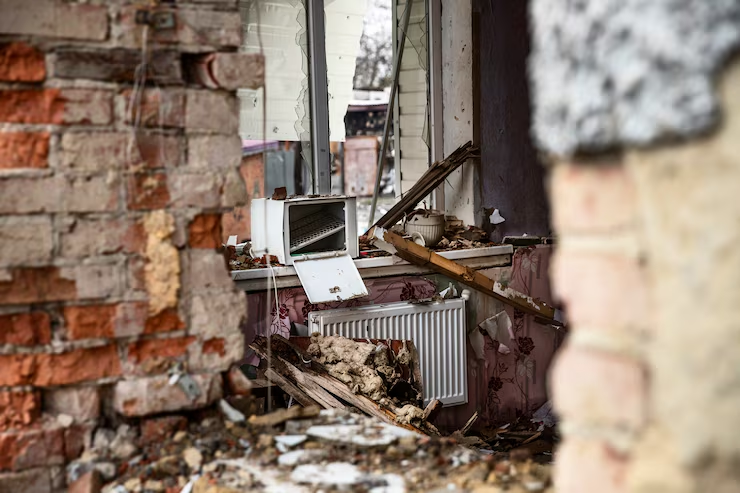
The building shook at 3:00 in the morning. Not the gentle rumble of a passing truck, but the deep, bone-rattling sound of concrete cracking. I woke with dust in my mouth and the ceiling fractured above my head like a spider’s web.
At sixty-five, I’ve seen plenty in this life, but I never thought my home would become a death trap.
The firefighters arrived within minutes, their voices urgent: “Evacuate! Evacuate now!”
I ran down the stairs barefoot, grabbing only my purse and a photo of my daughter when she was five years old, gap-toothed and smiling. Outside, under the red pulse of police lights, an inspector sealed the entrance with yellow tape. Condemned building. Risk of total collapse.
Thirty-two years I had lived in that apartment. Thirty-two years of memories buried under rubble. And there I was, standing on the street at three in the morning with nothing but the clothes on my back and a pair of house slippers.
I called Beth, my only daughter, my blood, the woman to whom I had given everything, even when I had nothing to give.
The phone rang five times before she answered, her voice thick with sleep and irritation.
“Mom, it’s four in the morning.”
I explained everything. The collapse, the evacuation, the firefighters, the inspector. I told her I just needed to stay with her for a few days, just until I could figure something out.
There was a long silence. Too long.
Then I heard Robert’s voice in the background, my son-in-law, sharp and annoyed.
“Tell her no. You know how she is. She’ll stay forever. We have the kids to think about.”
Beth sighed, and I could picture her pinching the bridge of her nose the way she always did when something inconvenienced her.
“Mom, it’s just that Robert’s right. We have our routine. The kids have their activities. We can’t interrupt everything for—”
She didn’t finish the sentence. She didn’t need to.
I hung up with trembling hands.
The Door That Stayed Closed
I drove to their house anyway. What choice did I have? A motel would drain my savings in days. A shelter felt like admitting defeat. I had raised this girl. Surely, seeing me in person would change her mind.
I rang the doorbell of the house with the manicured lawn and the basketball hoop in the driveway. Robert opened the door just a crack, his body blocking the entrance, his face a mask of irritation.
“Mary, we talked about this on the phone. It’s not a good time.”
I pleaded with him. I told him I just needed the sofa. One week, anything. I promised I wouldn’t be a burden.
He shook his head with that look of superiority he’d always had, the look that said he’d married above his station and never let anyone forget it.
“Look, I’m not going to beat around the bush. You’ll disrupt our routine. The kids will lose their structure. And frankly, I don’t have room for someone who brings nothing but drama and needs.”
The word hung in the air like smoke.
Drama.
I tried to respond, but Beth appeared behind him. My own daughter. The baby I had nursed. The child whose scraped knees I had bandaged a thousand times. She looked at me with cold, distant eyes, as if I were a stranger selling something she didn’t want.
“Mom, I already told you we can’t. Maybe try calling some shelters or something. There are resources for people in your situation.”
And she closed the door.
The sound of the deadbolt sliding into place was the last thing I heard before I was left alone on the curb, standing under the glow of their porch light like an unwanted package.
I walked back to my old car, a 2005 Toyota with a broken bumper and dead air conditioning. I sat in the driver’s seat and looked at my hands. Wrinkled hands, sun-stained, misshapen by decades of hard work. Hands that had cleaned other people’s houses. Hands that had cooked thousands of meals. Hands that had cared for children who weren’t mine while my own daughter grew up without me.
And now those hands had nothing.
The Weight of the Past
The crying came in violent waves, sobs that shook my whole body. I cried for the lost apartment. I cried for the daughter who had rejected me. I cried for the years wasted believing that sacrifice meant something.
But what hurt the most was understanding why Beth hated me so much.
Because for thirty years I wasn’t there for her. Not because I didn’t want to be, but because I was busy being a mother to another boy. A boy named Samuel Roman, the son of my employer, Lucille. I was his nanny, his everything.
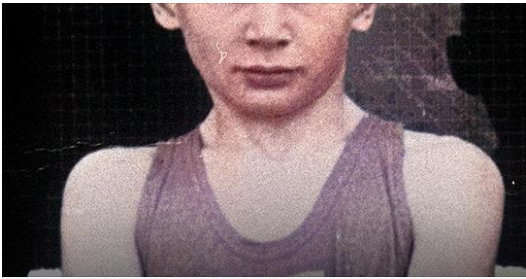
From the day he was born until he turned eighteen, I was the one who cared for him. I soothed his fevers. I took him to school. I taught him to read. I dried his tears when the other kids made fun of him for being a little overweight and wearing thick glasses.
Lucille was always traveling, building her business empire, and I stayed in that huge Manhattan townhouse, raising her son as if he were my own. Better than my own, if I’m being honest.
Beth complained a thousand times. “You’re always with that rich kid. You’re never with me.”
She was right.
I worked Monday through Saturday, twelve hours a day, sometimes more. I would come home exhausted just to sleep and leave again. Beth’s birthdays, school plays, the nights when she had nightmares—I wasn’t there.
I was with Sam, reading him stories, making his favorite meals, being the mother that Lucille couldn’t be. And Beth grew up hating me for it. Hating me for choosing a stranger over her. Hating me for selling my motherhood to the highest bidder.
I couldn’t blame her. I hated myself for it too.
But I had needed the money. Her father had left us when she was three years old. I was a woman with no education, no family, no options. The job with Lucille paid well—very well. It allowed me to give Beth a good school, decent clothes, food every day, a life I never had.
I thought that would be enough. I thought money would compensate for my absence.
I was wrong.
Beth never forgave me. And now, decades later, that resentment had blossomed into this cruel rejection, into a door closed firmly in my face.
Three Days in Purgatory
I spent three days sleeping in my car, parked in different spots so the police wouldn’t bother me. I used gas station restrooms to wash my face. I ate what I could afford with the few dollars I had—bread, bananas, water from a fountain.
My body ached. My bones creaked. At sixty-five, sleeping in a car seat is torture, but I had no alternative.
I called old friends. They all had excuses.
“Oh, Mary, what a shame. But right now we’re remodeling.”
“My son just moved back home. There’s no space.”
“Have you tried your daughter?”
Yes. I tried my daughter. And my daughter had looked me in the eye and told me to find a shelter.
On the fourth day, I saw Beth’s social media post. A picture of her with her kids, all smiling perfectly. The caption said: “Family is everything, but REAL family—not those people who only show up when they need something. Some mothers only know how to be mothers to other people’s children. Grateful I learned what NOT to be.”
The comments were worse.
“Exactly. Boundaries are important!”
“How brave to speak your truth!”
“Toxic mothers are the worst.”
Nobody knew she was talking about me, but I knew. And it hurt more than the rejection at her door because it was public. It was permanent. It was her version of the story where I was the villain and she was the victim.
The Call
That night, sitting in my car under a flickering streetlight, I pulled out my phone. I had a contact saved for years, a number I had never dared to dial.
Sam – Doctor
I had saved it when Lucille gave it to me the day I retired.
“Mary, if you ever need anything—anything at all—call my son. He will never forget you.”
I never called because of pride. Because of shame. Because I didn’t want to be that old employee asking for favors.
But now I had no pride. I had no shame. I only had desperation.
With trembling fingers, I dialed the number.
It rang once. Twice. Three times.
“Hello?”
The voice was deep, confident, professional. For a second, I couldn’t speak. It had been nearly fifteen years since I last heard that voice. The last time, Sam had been eighteen and about to leave for college. Now he was a man, a famous cardiovascular surgeon, a millionaire. And I was just the old nanny who had changed his diapers.
“Hello? Who is this?” he asked again.
I swallowed hard.
“Sam, it’s me. Mary.”
The silence on the other end lasted barely a second, but it felt eternal.
Then his voice changed completely. It became warm, almost boyish.
“Mary? Mary, is that really you? How are you? Where are you? Why didn’t you ever call?”
His enthusiasm broke me. Tears came without permission.
“Sam, I… forgive me for calling like this out of nowhere, but I…”
I couldn’t finish. Crying choked the words in my throat.
“Mary, breathe. Calm down. What happened? Tell me everything.”
His voice was so gentle, so worried. I told him everything. The collapsed building, the loss of the apartment, the call to Beth, the rejection from Robert, the door closed in my face, the days sleeping in my car. Everything came out in a disorganized torrent of pain.
Sam listened without interrupting. When I finished, there was a brief silence.
Then his voice sounded different. Harder. With contained anger.
“Give me your exact location right now.”
I gave him the address of the gas station where I was parked.
“Don’t move from there. I’m coming. Give me forty minutes. Mary, listen to me carefully. You are not going to spend one more night in that car. Do you hear me? Not one more night.”
He hung up before I could answer.
I stared at the phone, unable to believe what had just happened. Sam was coming. The boy I had raised. The boy who had called me Mama Mary when his mother wasn’t around. The boy I had taught to ride a bike. The boy who had cried in my arms when other children made fun of him.
That boy was now a powerful man. And he was coming to rescue me.
The Black SUV
Thirty-five minutes later, I saw the lights.
It wasn’t a normal car. It was a huge, shiny black SUV with tinted windows and New York plates. Behind it came another identical vehicle. The kind of convoy you only see in movies.
The SUV parked in front of me, and a man in a dark suit stepped out of the driver’s seat. He opened the rear door with practiced precision.
And Sam stepped out.
My Sam.
But he wasn’t the slightly overweight boy with glasses I remembered. He was a tall, fit man with perfectly styled hair and a watch that probably cost more than everything I’d owned in my life. He wore an impeccable charcoal suit, a crisp white shirt, and he had that presence that only people accustomed to power possess.
But when he saw me, his face transformed. His eyes filled with tears.
He ran toward me and hugged me as if he were a child again.
“Mary. My Mary.”
His voice broke. He squeezed me against his chest, and I felt his heart beating fast. He smelled of expensive cologne and success, but his embrace was the same as when he was five years old and afraid of thunderstorms.
We stayed like that, hugging in the middle of the gas station parking lot, while the driver and two bodyguards waited respectfully to the side.
“Forgive me for not calling sooner,” he whispered. “Mom told me you had moved, that you wanted your space, that you didn’t want us to bother you. I looked for you on social media, but I couldn’t find you. I thought… I thought you wanted to forget about us.”
I shook my head, unable to speak.
He pulled back slightly and looked into my eyes. His eyes were the same—clear, honest, full of kindness.
“It doesn’t matter. I’m here now, and I swear to God that no one is ever going to treat you like that again.”
He took my arm gently, as if I were made of glass, and guided me toward the SUV.
The driver, a man named Dave, greeted me with respect.
“Mrs. Mary, it’s an honor. The doctor talks about you all the time.”
Sam helped me into the back seat. The interior was like another world. Soft leather, climate control, bottles of mineral water, even a folded blanket.
“Dave, take us home,” Sam ordered, sitting beside me.
Then he turned to me, and something darkened in his gaze.
“But first, I need to know something. Where does your daughter live? The one who closed the door on you.”
I hesitated, then gave him Beth’s address.
“Perfect,” Sam said quietly. “Let’s make one stop first.”
The Confrontation
During the drive to Beth’s neighborhood, Sam told me about his life. After college, he’d gone to medical school. He specialized in cardiovascular surgery. He’d opened his own clinic. Now he had three clinics in different cities. He operated on celebrities, politicians, executives. He charged amounts I couldn’t even imagine.
“A complex surgery pays me between fifty and a hundred and fifty thousand dollars, Mary. And you know what motivates me every time I enter an operating room?”
He looked at me.
“I remember you when you took care of me when I was sick. How you taught me that caring for others is the most important thing. You taught me to be a doctor, even if you don’t know it.”
His words made me cry again. This successful man, this millionaire surgeon, was giving credit to me—the uneducated domestic worker.
We arrived at Beth’s neighborhood. It was one of those middle-class developments with identical houses and small lawns. The black SUV and security vehicle caused an immediate stir. Neighbors came to their windows. Some opened their doors.
Dave parked directly in front of Beth’s house. Sam got out first and helped me out. The bodyguards positioned themselves discreetly nearby.
“Ready?” Sam asked me.
I wasn’t, but I nodded anyway.
We walked to the door. Sam rang the doorbell firmly.
I heard footsteps inside. Robert’s voice grumbling.
“Now who the hell is it?”
He opened the door with an annoyed expression. That expression died instantly when he saw Sam—tall, elegant, with a presence that demanded respect. Behind him, the gleaming vehicles and bodyguards.
Robert blinked in confusion.
“Yes?”
Sam didn’t smile. His voice was ice cold.
“Good evening. I am Dr. Samuel Roman, cardiovascular surgeon. I’ve come to talk about Mary.”
He pronounced every word with cutting clarity.
Robert stared at him without understanding. Then he saw me standing behind Sam. His face went from confusion to discomfort.
“Mary, what do you have to do with—”
Beth appeared behind him, wiping her hands on a kitchen towel. When she saw me, her expression hardened.
“Mom, we already told you we can’t help. Now you bring strangers to our door?”
Sam stepped forward, not aggressive, but firm.
“I’m not a stranger. I’m the boy this woman raised for eighteen years. The child she fed, cared for, educated, and loved while sacrificing time with her own daughter. The boy who called Mary ‘Mom’ when he had nightmares. And I just found out that you left her to sleep in a car after her building collapsed.”
The silence that followed was brutal.
Beth opened her mouth, but no sound came out. Robert tried to regain his composure.
“Look, sir, you don’t understand the family situation. This isn’t—”
Sam interrupted him.
“No, you don’t understand. This woman sacrificed time with her own daughter to take care of me. She came home exhausted and still made sure that you,” he pointed at Beth, “had food, clothes, education. She worked until her body broke to give you a better life. And when she needed you most, you slammed the door in her face.”
Sam’s voice rose slightly.
“And your husband called her a burden. He said she brings ‘nothing but drama and needs.'”
Robert turned pale.
“I never—that was taken out of context—”
Sam pulled out his phone.
“I have people who heard that conversation. Do you want me to share this story? I have two million followers on social media. I’m a public figure. If I tell this story, your name, Robert Vega, will be marked forever. Your wife Beth will be known as the daughter who abandoned her mother on the street. Is that what you want?”
Beth stepped forward, panic in her eyes.
“No, please don’t do that. My business… I have clients. This could—”
Sam looked at her coldly.
“Exactly. It could ruin your life the same way you ruined your mother’s peace of mind. But you know what? I’m not going to do that. You know why?”
He turned toward me, his expression softening completely.
“Because Mary taught me to be better than that.”
He looked back at Beth.
“Mary doesn’t need anything from you ever again. I will take care of her. She’ll have a home better than this one. She’ll have financial security. She’ll have dignity. Everything you denied her.”
Robert tried to speak, but Sam raised his hand.
“We’re done here.”
He took my arm gently.
“Let’s go, Mary. There’s nothing here for you anymore.”
As we walked back to the SUV, Beth called out.
“Mom, wait. We can talk. Maybe there is space—”
I didn’t turn around.
Sam opened the vehicle door for me. Before I got in, he turned to Beth one last time.
“Now there’s space. How convenient. But guess what? We don’t need it anymore. Have a good life.”
We got into the vehicle. Dave pulled away smoothly.
In the side mirror, I saw Beth standing in her yard crying, Robert trying to get her to go inside, neighbors whispering among themselves.
And I felt something strange. Not triumph. Not satisfaction.
Liberation.
As if a decades-long weight had finally lifted from my shoulders.
A New Home
Sam squeezed my hand.
“You okay?”
I nodded.
“Better than I’ve been in years.”
He smiled.
“Good. Because now comes the best part. Let’s go home. Your new home.”
I looked out the window as we left Beth’s neighborhood behind, watching the identical houses and perfectly ordered lives fade into the distance.
Sam spoke again.
“Mary, I need you to understand something. You’re not a burden. You never were. You’re the reason I am who I am today. Every surgery I do, every life I save carries your imprint. You taught me to care, to have patience, to see people as human beings. That’s priceless.”
His words broke me in a beautiful way. I cried again, but these tears were different. They weren’t from pain. They were from relief, from gratitude, from hope.
“Thank you, Sam. Thank you for not forgetting me.”
He shook his head.
“Impossible to forget you. You’re a part of me.”
The rest of the drive passed in comfortable silence.
We arrived at an area of the city I had only seen in magazines. Tall buildings, modern and gleaming, with private security. Dave stopped in front of a glass tower that seemed to touch the sky.
“You live here?” I asked in astonishment.
Sam smiled.
“We live here. For now, at least.”
The elevator was glass. I could see the entire city as we ascended, lights shining like fallen stars. At sixty-five, I had never been in a place like this. The building smelled of money, of success, of a world completely foreign to mine.
Sam noticed my nervousness.
“Relax. This is your home now too.”
The elevator stopped on the twenty-second floor. The doors opened directly into a private foyer. Sam used a card to open his apartment door.
When we entered, I gasped.
It was enormous. Floor-to-ceiling windows showed the illuminated city. Elegant but comfortable furniture. A kitchen that looked like it had been pulled from a magazine. Everything in shades of gray, white, and cream. Clean. Modern. Perfect.
“I know it’s a lot,” Sam said, taking off his jacket. “But I want you to feel comfortable. This will be your home for as long as you need. Or forever, if you want.”
He led me down a hallway to a guest room. It was larger than the living room of my old apartment. It had a huge bed with sheets that looked like clouds, a private bathroom with a deep tub and a shower with multiple heads, an empty closet waiting to be filled.
“Tomorrow we’ll go shopping,” Sam explained. “Clothes, shoes, everything you need. But for now, rest. There are towels in the bathroom, new toiletries in the drawers. If you need anything, my room is across the hall. Don’t hesitate to knock.”
He left me alone.
I sat on the bed and just looked around. Four days ago, I had been sleeping in my car. Today I was in a luxury apartment.
Life could change so fast.
The Morning After
I took a long shower. The hot water was perfect. The products smelled of lavender. I put on a robe I found hanging in the bathroom—soft as butter.
When I came out, there were new clothes on the bed. Gray sweatpants, a white T-shirt, undergarments without tags, everything in my size. Sam had thought of everything.
I got dressed and found Sam in the kitchen making tea. He had changed into casual clothes—jeans and a comfortable shirt. He looked younger this way, more like the boy I remembered.
“Chamomile or mint?” he asked with a smile.
“Chamomile.”
We sat in the living room. The windows showed the sleeping city. Sam handed me the steaming cup.
“Mary, we need to talk about your future. I want you to be completely honest with me.”
I nodded. He continued.
“How much money do you have saved?”
The question embarrassed me. I looked down.
“Three thousand, two hundred dollars. That’s all. My Social Security is four hundred and fifty a month. It’s not enough to even rent a room anywhere safe.”
Sam showed no pity, just determination.
“Okay. We’re going to fix this. But first, I need to know what you want. Do you want to work? Do you want to rest? What makes you happy?”
I thought about his question. Nobody had asked me that in decades.
What made me happy?
“I like to cook,” I finally said. “And I like to take care of plants. I had a small garden on my apartment balcony. Tomatoes, herbs, flowers. It was my escape.”
Sam smiled.
“Perfect. Then here’s what we’re going to do. Tomorrow we’ll open a bank account in your name. I’ll put fifty thousand dollars in it.”
I opened my mouth to protest.
“No, listen to me.” He raised his hand. “It’s a gift, not a loan. You won’t have to pay it back. It’s the least I can do after everything you did for me.”
Fifty thousand dollars. It was more money than I had ever seen in my life.
“Sam, I can’t accept—”
He leaned forward.
“Yes, you can. And you will. I earn that in a week, Mary. One week. And for you, it means security. It means dignity. It means never having to beg for a place to sleep again.”
Tears rolled down my cheeks again.
“I don’t know how to thank you.”
Sam shook his head.
“You already paid me with years of your life, with unconditional love, with sacrifice. Now it’s my turn.”
He got up and went to his study. He came back with a folder.
“Besides the money, I have a proposal. My clinic needs someone to manage patient relations—someone to make patients and families feel comfortable, to talk to them, to bring warmth to a clinical environment. You’d be perfect for that. The salary would be three thousand dollars a month, flexible hours, no heavy physical work. Just being you.”
Three thousand dollars a month. Almost seven times my Social Security.
“Are you serious?”
Sam nodded.
“Think about it. You don’t need to answer now. Take your time.”
That night, I slept in a bed that felt like it was made of clouds. I had no nightmares. I didn’t dream of collapsing buildings or closed doors.
I dreamed of gardens, of ripe tomatoes, of flowers opening to the sun.
Six Months Later
I’m writing this from my own apartment now. A beautiful two-bedroom on the twelfth floor of a building overlooking a park. Sam found it for me, paid the deposit, made sure I had everything I needed.
The balcony has become my sanctuary. I grow tomatoes, basil, rosemary, lavender, and brightly colored flowers. Every morning, I water them and watch the sun rise over the city.
I work at Sam’s clinic three days a week. I sit with families during surgeries. I hold hands. I explain procedures. I bring coffee and comfort. The patients call me “Mary the Angel.”
Last week, a woman whose husband was having triple bypass surgery held my hand and said, “I don’t know what I would do without you here.”
I thought about Beth. About the door she closed. About how that rejection led me here, to this purpose, to this life.
Sam and I have dinner together twice a week. We’ve become what we always were—mother and son. Last month, he even started the paperwork for adult adoption. He wants my last name to be part of his legally.
“I want the world to know you’re my mother,” he told me. “Because you are.”
As for Beth, we’ve spoken a few times. She’s in therapy now. She sent me a long letter apologizing, explaining her anger, her resentment, her pain. I wrote back and told her I forgave her, but that forgiveness didn’t erase consequences. That we could rebuild, but slowly, on new terms.
She sends me photos of my grandchildren now. I’ve met them twice. They’re beautiful kids. Maybe one day we’ll have a real relationship.
But I’ve learned something important: I don’t need her approval to have worth. I don’t need her love to be whole.
Because I have myself. And I have Sam. And I have this beautiful life I built from the rubble of the old one.
Sometimes the doors that close in our faces aren’t rejections. They’re redirections. They’re the universe pushing us toward where we’re actually meant to be.
That night when Robert closed his door on me, I thought my life was over.
I was wrong.
It was just beginning.
And to anyone reading this who feels invisible, who feels like they’re standing on the wrong side of a closed door: Stop knocking. Turn around. Walk away.
Build your own house.
Because the people who truly see your worth will find you. And if they don’t?
You’ll still have yourself.
And that, I’ve learned, is more than enough.