My son said, Mom, just don’t come to the wedding. I smiled and whispered, Okay, sweetheart. When the wedding day came with no flowers, no cake, the bride’s father shouted, You told me your mother was… My son didn’t raise his voice when he said it. He didn’t look angry either. He just stared at the floor and said, Mom, just don’t come to the wedding. I felt my chest tighten, but I didn’t let it show. I smiled the way mothers do when they don’t want their children to see the hurt. I reached for his hand and whispered, Okay, sweetheart. He looked relieved. That hurt more than anything else. On the wedding day, when there were no flowers, no cake, and people started asking questions, I was exactly where he told me to be. Nowhere.
Before all of that, my life was simple and full of familiar sounds. I lived alone in the small house where I raised Eli. The floors creaked, the kitchen window stuck in the winter, and the porch light flickered if it rained too hard. I worked mornings at a grocery store and evenings cleaning offices downtown. It wasn’t easy, but it was honest. When Eli was a boy, I packed his lunches with little notes folded inside. I went to every school play, even the bad ones. When his father left, I didn’t talk badly about him. I just held Eli closer. Every Sunday evening, I called my sister June. She lived a few towns over and knew everything about my life. When I told her Eli was getting married, she said, You must be so proud. I was. I truly was.
Our neighbor, Mr. Lawson, helped me fix things around the house when they broke. He used to say, You did a good job with that boy. I believed him. Then Eli met Tessa. She was young, well-dressed, and always polite in a careful way. Her family had money. Her father, Grant, talked loudly and paid for everything without checking prices. When I offered to help with the wedding, Eli said, We’ve got it covered, Mom. After that, the invitations stopped. I wasn’t asked about dates or colors. I wasn’t included in conversations anymore. When I called, Eli sounded rushed. When I asked questions, he changed the subject. I told myself it was normal. Children grow up. They move on. I didn’t want to be the kind of mother who clings. But sometimes, late at night, I sat at my kitchen table and wondered when I had started feeling like a problem instead of a parent. I still believed love would be enough to fix whatever distance had grown between us.
The distance didn’t happen all at once. It came in small pieces, easy to excuse if you didn’t want to look too closely. Eli stopped calling as often. When he did, the calls were short, like he was always in the middle of something more important. If I asked how the wedding planning was going, he’d say, Good, and move on. I told myself he was busy. I told myself not to push. The first real sting came when I heard about the engagement party from someone else. June mentioned it casually on the phone. I saw pictures online, she said. You didn’t go? I felt my throat tighten. I told her I couldn’t make it. That was a lie, but it was easier than saying the truth out loud. After we hung up, I sat on the edge of my bed and stared at the wall, trying to understand when I had stopped being included.
A week later, I ran into Mr. Lawson while checking the mail. He smiled and said, How are you holding up? I asked him what he meant. He looked uncomfortable and said, Eli told me you weren’t feeling well. That’s why you haven’t been around. My stomach dropped. I laughed it off and said, I’m fine. But the words stayed with me long after he walked away. I called Eli that night. I asked him why people thought I was sick. There was a pause on the line. Too long. Then he said, I didn’t say that. His voice sounded tight, like he was balancing something fragile. I wanted to believe him, so I let it go. Hanging up felt worse than the conversation.
As the wedding got closer, the stories grew. June heard from someone at church that I was unstable. Another neighbor asked if I had moved away. Each time I smiled and corrected them. Inside, something was twisting, slow and painful. I started to wonder what version of me was being shared behind my back. One evening, Eli came over without calling first. He stood in my kitchen and didn’t take his jacket off. He didn’t sit down. He kept looking at the clock. I offered him coffee. He shook his head. That’s when I knew something was coming. Mom, he said, we need to talk. I waited. He told me it would be better if I didn’t come to the wedding. He said it gently, like he was asking for a favor. I asked why. He said it was complicated. I asked him to explain. He rubbed his hands together and said, Tessa’s family wouldn’t understand. That word again. Understand what? Me. I asked him what he had told them about me. didn’t answer right away. He said, I just want everyone to be comfortable. I felt my chest ache, but I kept my voice steady. And I make them uncomfortable? He didn’t say yes. He didn’t say no. That silence told me enough.
After he left, I cried for the first time since he was a child. Not loud. Just quiet tears that came while I sat alone at my kitchen table. I thought about every sacrifice I made without keeping score. I wondered how those years had turned into something that needed to be hidden.
A few days later, June came by. She looked angry before I even said anything. She told me she overheard Grant talking at a restaurant. He was bragging about paying for the whole wedding. Someone asked about me. He laughed and said, her mother isn’t in the picture. My hands started shaking. June reached for me and said, what is he telling people?
That night, I couldn’t sleep. I kept replaying every conversation, every pause, every excuse. The pieces finally lined up in a way I couldn’t ignore. I wasn’t being left out by accident. I was being removed on purpose.
I decided to look for answers instead of guessing. I pulled out the folder where I kept old papers and found the list of vendors Eli had mentioned once, months ago. I started making calls. The florist answered first. I gave my name. There was a pause. Then she said, yes, you’re listed as the contact. My heart pounded. I called the baker. Same answer. The venue manager confirmed it too. All arrangements are under your name, she said. We’ve been waiting to hear from you.
That was the moment everything shifted. I wasn’t just uninvited. I was erased, turned into a story that made other people feel better. The pressure in my chest changed shape. It wasn’t just hurt anymore. It was clarity. And clarity has a way of demanding a response. Once I understood what had been done, I stopped crying. The hurt didn’t disappear, but it settled into something solid.
I sat at my kitchen table with the vendor list spread out in front of me and realized I had a choice. I could call Eli and confront him, demand answers, beg him to fix it, or I could finally accept what he had already decided for me and act on my own terms. I chose the second option.
The next morning, I called the florist back. My voice was calm, steadier than I felt. I told her there had been a change and that I needed to cancel the order. She hesitated. Are you sure? She asked. The arrangements are quite large. I told her yes, I was sure. She apologized and said she would process it right away. When I hung up, my hands shook, but there was also a strange sense of relief.
I called the baker next. He sounded cheerful, talking about tears and flavors like nothing in the world was wrong. I stopped him and said, there won’t be a wedding this weekend. He went quiet. Do you want to reschedule? He asked. No, I said. I want to cancel. He confirmed it and wished me luck. His voice softer than before.
The venue was last. The manager recognized my name immediately. We’ve been trying to reach you, she said. We still need final confirmation. I told her there would be no confirmation. She asked if there had been a problem. I paused, then said, yes, a big one. She didn’t push.
After that, I sat in the quiet house and waited for the guilt to come crashing in. It didn’t. Instead, I felt tired. Not the kind of tired that sleep fixes, but the kind that comes from carrying something heavy for too long. I made myself a cup of tea and stared out the window, thinking about how much I had given without ever being asked.
Eli called that afternoon. I watched the phone ring until it stopped. He called again an hour later. Then he texted, Mom, we need to talk. I put the phone face down and didn’t answer. For the first time in my life, I didn’t rush to make things easier for him.
June came by that evening. She took one look at me and said, you did something. I told her everything. She listened without interrupting, her jaw tight the whole time. When I finished, she said, good. That surprised me. You didn’t cause this, she added. You just stopped pretending it wasn’t happening.
The night before the wedding, I slept better than I had in weeks. Not because I was happy, but because I wasn’t lying to myself anymore. I knew what would happen the next day. I knew people would be confused and angry. I knew my son would be forced to answer questions he had avoided. That thought hurt, but it also felt necessary.
On theOn the morning of the wedding, I got dressed like it was any other day. I cleaned the kitchen. I watered the plants. Around noon, my phone started buzzing nonstop. Calls from numbers I didn’t recognize. Texts from Eli. Messages from June telling me things. were already falling apart. I didn’t respond.
Around two in the afternoon, I got a call from an unfamiliar number. When I answered, a man’s voice demanded to know what I had done. I knew immediately it was Grant. He was angry, loud, used to being in charge. I let him finish before I spoke. You should ask your daughter and my son, I said. Then I hung up. That was the moment I decided I would go after all. Not to beg. Not to fix anything. Just to stand where I had always belonged.
I put on my coat, looked at myself in the mirror and said out loud, You didn’t disappear. Then I picked up my purse and left the house. I didn’t know exactly what I would say when I arrived. I just knew I wasn’t hiding anymore. And whatever waited for me at that wedding, it was finally going to be faced in the open.
The parking lot was full when I arrived. Cars lined the edges, and guests stood outside the entrance, dressed up and confused, checking their phones and looking at the building like it might explain itself. I stepped out of my car slowly. No one noticed me at first. I was just another woman walking toward a wedding that wasn’t happening the way it was supposed to.
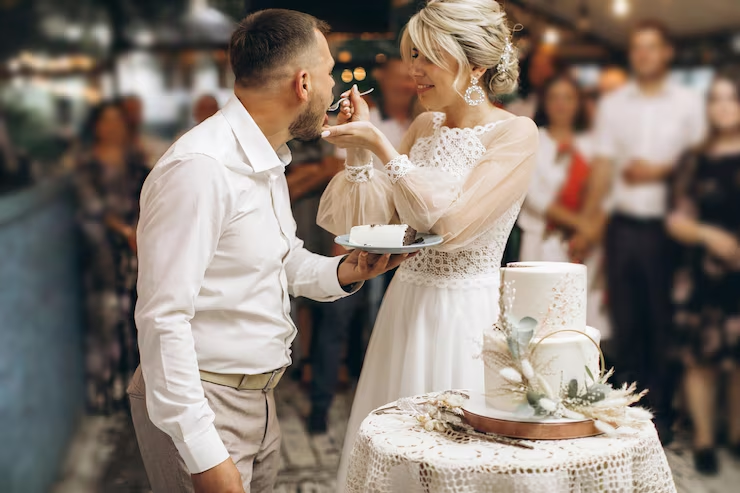
Inside, the hall felt hollow. The tables were set, but bare. No flowers. No centerpieces. The space where the cake should have been was empty. Just a long table covered in white cloth. A speaker stood unplugged in the corner. People murmured to each other, voices low but sharp with frustration. I recognized a few faces. Some of them looked at me, then looked again, like they weren’t sure what they were seeing.
Grant was near the front, red-faced, phone pressed to his ear. He was pacing, shouting into it without caring who heard. This is unacceptable, he said. Do you have any idea how much this costs? He hung up and turned, ready to yell at the next person who came near him. That’s when he saw me. His mouth opened, then closed. His face shifted from anger to confusion.
Who are you, he asked. The room went quiet enough to hear the air moving. I took a few steps forward and said, I’m Eli’s mother. His eyes widened. He looked past me, scanning the room like I might be joking. That’s not possible, he said. You told me your mother was… He stopped himself, but it was too late.
You told him I was what? I asked. Eli was standing behind him. I hadn’t seen him yet. He looked pale, his tie crooked, his hands clenched at his sides. Tessa stood next to him, eyes already wet, makeup perfect but cracking at the edges. Grant turned slowly toward Eli. You said she wasn’t in your life, he said. You said she was unstable. You said she was gone. His voice rose with each sentence. You said she was dead.
Every sound dropped out of the room. I felt it hit me, heavy but clean, like the truth finally landing where it belonged. I didn’t raise my voice. I didn’t need to. I’m alive, I said. I just did what my son asked. I stayed away.
Tessa stared at Eli like she was seeing him for the first time. You told me she chose not to come, she said. You said she didn’t care. Eli opened his mouth, then closed it. No excuse came out this time. Grant turned back to me, his anger draining into something closer to shame. I’m sorry, he said stiffly. I didn’t know. I nodded once. I believe you.
People started talking all at once. Questions flew. Someone asked where the cake was. Someone else asked if the wedding was cancelled. The venue manager stepped forward, trying to regain control, but there was no controlling this. The truth had taken the room over.
Eli finally looked at me. His eyes were red, his voice unsteady. Mom, he said. Just that. I looked at him and felt years of love rise up without pushing the hurt away. You didn’t have to erase me, I said quietly. You could have just told the truth.
He dropped his head. I was scared, he said. I didn’t think they’d accept you. I answered, you didn’t give them the chance. Tessa stepped back, shaking her head. I don’t know who you are, she told him. Her voice wasn’t angry. It was broken. You let me believe lies. She turned and walked toward her parents. Grant followed her without another word.
The wedding didn’t end with shouting, or police, or drama. It ended with people leaving in small groups, whispering, avoiding eye contact, carrying coats they never planned to put back on so soon. Someone started taking down chairs. Someone unplugged the speaker.
Eli came toward me again, slower this time. I didn’t want to hurt you, he said. I looked at him and said, but you did. That was all. He nodded, tears falling freely now. I turned and walked out before either of us could say more. The sun was still bright outside. Life hadn’t stopped. I stood there for a moment, breathing, feeling the weight lift in a way I hadn’t expected. I hadn’t ruined anything. I had simply stopped holding a lie together with my silence. And for the first time since my son told me not to come, I felt fully present again.
I didn’t go straight home after I left the hall. I drove without thinking, letting the roads decide for me, until I ended up parked near the river where I used to take Eli when he was little. I sat there with the engine off and my hands resting on the wheel, breathing until my chest stopped feeling tight. I wasn’t shaking. I wasn’t angry. I just felt quiet in a way I hadn’t felt in years.
That night, my phone stayed silent. No calls, no messages. I was grateful for that. I needed the space. When I finally went home, I slept deeply, the kind of sleep that comes after something heavy has been set down. In the morning, the house felt the same, but I didn’t. I moved through my routine slower, more aware of myself in each moment.
June came by that afternoon. She didn’t ask questions right away. She made coffee and sat across from me at the kitchen table. After a while, she said, you didn’t do anything wrong. I nodded. Hearing it out loud mattered more than I expected. She stayed for a while, talking about nothing important, then hugged me before she left.
A few days later, Grant called. His voice was calmer than it had been before, stripped of its usual force. He apologized again, this time without excuses. He said he was embarrassed by what he had believed without checking. I thanked him for saying that. We didn’t talk long, but it ended cleanly. That was enough.
Tessa sent me a letter a week after the wedding was supposed to happen. It was handwritten, careful. She said she was sorry for not asking questions sooner. She said she didn’t know if she could trust Eli again. I didn’t write back right away. When I did, I kept it simple. I told her I wished her peace and honesty, whatever path she chose. I meant it.
Eli didn’t come by for a while. I expected that. Some things need time to settle. When he finally knocked on my door, he looked like he had aged. He didn’t step inside right away. He stood on the porch and said, I don’t know how to fix this. I told him, you don’t fix it. You face it. We sat at the kitchen table and talked for hours. Not arguing, not crying much either. Just telling the truth, one piece at a time. He admitted he had been ashamed of where he came from. He thought love meant blending in, even if it meant cutting parts of his life away. I listened without interrupting. When he finished, I said, I would have stood beside you anywhere. You didn’t have to hide me. He cried then. I didn’t. I held his hand and let him.
Our relationship didn’t return to what it was overnight. It changed into something more honest and slower. We talked more carefully. We listened more. Some trust has to be rebuilt instead of assumed. We both understood that. What changed most was me. I stopped shrinking to make room for other people’s comfort. I stopped apologizing for my presence. I realized how often I had stayed quiet to keep peace, even when peace was built on something false. That kind of quiet costs too much.
I still live in the same house. I still work the same jobs. My life didn’t turn dramatic or grand. It turned steady. I walk with my head up now. When people ask about my son, I tell the truth. When something hurts, I say so. When I’m proud, I don’t hide it. Looking back, I don’t regret how I handled that day. I didn’t scream. I didn’t threaten. I didn’t destroy anything. I let the truth arrive on its own, and it did exactly what truth is meant to do. It exposed what couldn’t survive anymore.
I love my son. That never changed. But I love myself enough now to never agree to disappear again. Being a mother doesn’t mean accepting shame that isn’t yours. It means showing your child what dignity looks like, even when it’s hard. That wedding never happened, but something else did. A lie ended. A boundary formed. And a woman who had spent years standing quietly in the background finally stepped fully into her own life.
If you want more stories, subscribe and tell me where you’re watching from.