The Soup That Changed Everything
They say that the loudest sound in the world isn’t an explosion or a scream. It’s the sound of a door closing when you’re standing on the wrong side of it.
For me, that sound came at seventy years old, in a dining room I’d secretly purchased, from the mouth of a daughter I’d raised alone after her mother died. But before the door closed, before the silence became deafening, there was soup. Hot soup. And a smile that told me everything I needed to know about the last five years of my life.
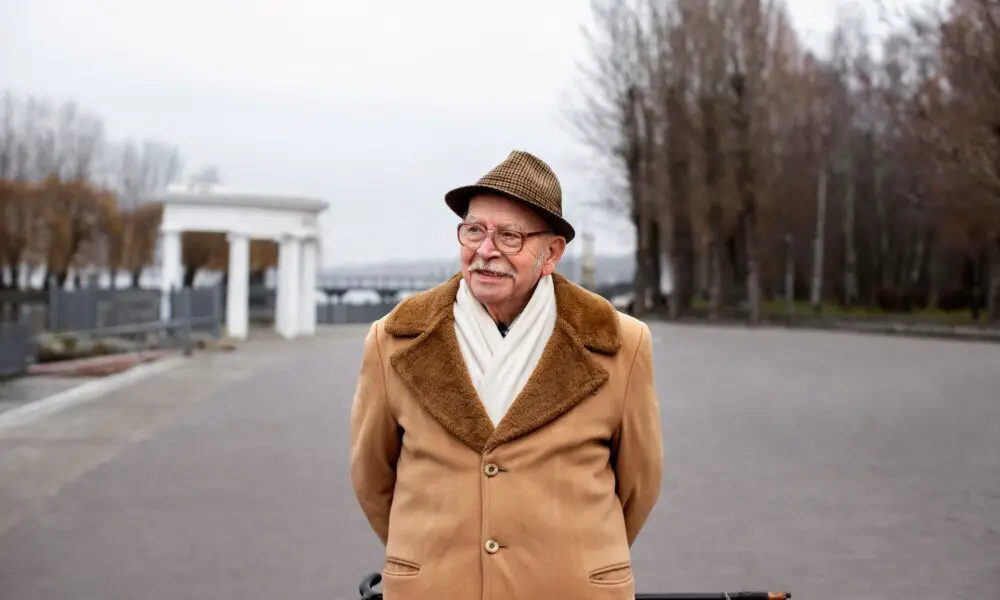
My name is Harrison Caldwell, though for half a decade everyone has called me Hank. I’m seventy years old, and I’ve spent the last five years living as a ghost, a deliberate phantom haunting the edges of my own family’s life. I drive a battered 1990 Ford pickup with rust consuming the wheel wells. I wear flannel shirts from thrift stores and let my hair grow shaggy, my beard wild and unkempt. I told my family that my Social Security check of fifteen hundred dollars a month was the only income I had left, that I was just a retired truck driver whose best days had passed him by.
They believed every single word.
What they don’t know—what they’ve never suspected—is that I’m the founder of Caldwell Logistics, a shipping empire I built from a single truck forty years ago into a nationwide operation. They don’t know I sold that company five years ago for a sum that would make their eyes water. They don’t know I still maintain consulting agreements and board positions that generate more in a month than they earn in a year.
I hid my wealth deliberately, methodically, completely. I did it to teach them independence, to see if they could stand without my money propping them up. But more than that, I did it to answer one devastating question: did they love me for who I was, or for what I could provide?
Tonight, on my seventieth birthday, as scalding soup burned my face and my daughter chose her husband’s comfort over her father’s dignity, I finally received my answer.
And it hurt worse than any physical pain ever could.
The Birthday Dinner
The evening started like most of my visits to their home—with me feeling like an unwelcome guest at a party where I wasn’t quite invited. The dining room of the house on Oak Creek Lane was warm and expensively decorated, filled with furniture and artwork they couldn’t actually afford on their legitimate income. I knew this because I’d been quietly monitoring their finances for years through my attorney, watching them sink deeper into debt while maintaining the glossy appearance of success.
Brad, my son-in-law, sat at the head of the table wearing a new Rolex Submariner that probably cost eighteen thousand dollars—money borrowed, I was certain, from somewhere inadvisable. He’s thirty-eight years old, a failed real estate broker who believes success is something you wear rather than something you build through actual work and sacrifice.
He tapped his wine glass with a fork, demanding everyone’s attention. “I want to make a toast,” he announced, his voice carrying that particular smugness of a man who’s convinced himself he’s accomplished something. “To me, for closing the biggest deal of my career this week. Major things are coming, people.”
He looked directly at me with undisguised contempt. “You wouldn’t understand any of this, Hank. High finance is considerably more complicated than driving a truck from point A to point B.”
I said nothing. I’d learned over five years that silence often reveals more truth than argument. I looked at my daughter Emily, thirty-five years old, sitting beside her husband wearing a diamond necklace I was certain they couldn’t afford. She twisted her napkin nervously and wouldn’t meet my eyes.
“Happy birthday, Dad,” she finally managed, sliding a small envelope across the polished table.
Inside was a twenty-dollar gift card to a discount pharmacy. I’d given them thousands over the years when I was “wealthy,” back before my supposed collapse. Now that they believed I was poor, this was what my birthday was worth to them.
“Thank you, sweetheart,” I said, meaning it. The gesture should have mattered more than the amount.
I reached under my chair and pulled out the gift I’d brought for my grandson Leo, who was seven years old and playing with toy cars on the floor nearby. It was a wooden truck I’d spent three weeks carving and sanding in my garage workshop, crafted from oak and polished until the wood felt like silk beneath your fingers. I’d built it with the same hands that had built a company, carved it with the same attention to detail that had made me successful decades ago.
Brad snatched it from my hands before I could give it to Leo.
“What’s this, Hank? Firewood?” He held it up mockingly, examining it like it was garbage. “We buy Leo tablets and gaming systems. We don’t give him garage scraps.”
He tossed the truck onto the hardwood floor. It landed with a heavy thud and a piece of the wheel I’d so carefully shaped chipped off and skittered under the sideboard.
My heart cracked with that sound, but I kept my face neutral. I’d spent five years learning to hide my reactions, to play the role of the defeated old man.
I turned back to my soup—a thick pumpkin bisque that was aggressively salty and had gone cold while Brad performed his toast. I took a spoonful and grimaced slightly at the taste.
“This is a bit salty,” I said quietly. Just an observation. A simple comment from an old man whose taste buds still functioned.
That innocent remark was the spark that lit the fuse.
Brad’s face went crimson. A vein bulged in his neck, pulsing visibly. He slammed his fist on the table so hard the fine china rattled and wine sloshed from glasses. “Salty? You’re complaining?” His voice rose to a shout that filled the room. “You sit in MY house, eating MY food, drinking MY wine, and you have the audacity to criticize? You contribute fifteen hundred dollars a month, Hank. That doesn’t even cover the pool heating bill. You’re a burden. A useless old burden who’s overstayed his welcome.”
“Brad…” Emily said softly, but there was no force behind it, no real conviction. She wasn’t stopping him. She was merely going through the motions of disapproval.
“No, Emily, he needs to hear this,” Brad continued, standing up and grabbing his own bowl of soup. The liquid was still steaming hot—I could see the vapor rising from the surface. I saw the wild look in his eyes but I couldn’t quite believe what was about to happen. Surely no reasonable person would—
“If you don’t like the soup, Hank,” Brad said, his voice dropping to something cold and cruel, “maybe you should wear it instead.”
He swung his arm in a wide arc.
The thick orange liquid hit me square in the face.
The Moment of Truth
The soup splashed into my eyes, my nose, my mouth. The heat was instant and agonizing—hot enough to burn but not quite hot enough to send me to the emergency room, which I suspected was calculated on some level. I gasped and choked as the liquid ran down my chin, my neck, soaking into my shirt.
But the physical pain was nothing compared to what I saw when I looked down at myself. I was wearing my old blue flannel shirt—the last shirt my wife Martha had bought me before she died five years ago from cancer. It was my armor, my connection to her memory. I’d kept it carefully pressed, had worn it on special occasions because it still carried the faint ghost of her perfume in its fibers.
Now it was stained orange, ruined by the cruelty of a man living in a house I had secretly purchased for my daughter’s family.
I sat there frozen, soup dripping from my eyebrows and beard. My skin burned with escalating intensity. The room went completely silent. Even Brad seemed momentarily shocked by what he’d done, though the shock lasted less than a second before his face hardened again.
Then he doubled down, leaning forward with vicious satisfaction. “That’s what you deserve, old man,” he said, sneering at me across the table. “Look at yourself. Pathetic.”
I slowly took the cloth napkin from my lap and wiped my eyes carefully. The stinging was severe, worse than I’d initially realized. I turned to Emily, my little girl—the child I’d carried on my shoulders through parks, the daughter I’d protected from every storm, whose college education I’d funded entirely, whose first car I’d purchased, whose wedding I’d paid for even when she married this monster.
I waited for her to explode at him. I waited for her to demand he apologize immediately. I waited for her to be my daughter, the girl I’d raised to stand up for what’s right.
“Dad,” she said, her voice trembling but her words unmistakable, “you shouldn’t have criticized the food. You know Brad is under tremendous stress with work. Maybe… maybe you should apologize to him.”
The silence after those words was heavier than anything I’d ever carried in my life.
Apologize. My daughter wanted me to apologize to the man who had just thrown scalding soup in my face on my seventieth birthday.
In that moment, something inside me died. Not Hank the truck driver—he’d been dead for years, just a performance, a character I played. What died was my hope. My belief that blood meant something fundamental. My faith that family would choose love over comfort when it mattered most.
And something else was born in that death: absolute clarity.
I didn’t yell. I didn’t overturn the table in rage. I stood up slowly, my seventy-year-old knees creaking in protest, but my spine was straight and strong. I used the napkin to wipe the worst of the soup from Martha’s ruined shirt. I folded the cloth neatly and placed it on the table next to the broken wooden truck, the birthday gift that had been treated like garbage.
I looked Brad directly in the eyes. He was smirking, absolutely certain he’d put the old man firmly in his place, asserted his dominance in his domain.
“You just made the biggest mistake of your life,” I said quietly, my voice carrying a weight it hadn’t held in five years.
He laughed—actually laughed, throwing his head back. “What are you going to do, Hank? Drive away in your rust bucket? Go ahead. Sleep in it for all I care. You’re not welcome here anymore.”
I didn’t look at Emily again. She’d made her choice in the clearest possible terms. She’d chosen the lifestyle, the house, the comfortable illusion. She’d chosen the man who hurt me over the father who’d sacrificed everything for her.
I walked out of that dining room without another word, past the family photos on the wall that suddenly felt like elaborate lies, past the expensive furniture they couldn’t afford, past the life they’d built on a foundation of debt and delusion. I opened the heavy front door and stepped out into the brutal Illinois winter night. The wind hit my burned face like a thousand frozen needles, but somehow it felt cleaner than the air inside that house.
I walked to my old Ford and stood beside it for a long moment, looking back at the house glowing warm and inviting against the dark sky, a picture-perfect facade hiding rot underneath.
Then I reached into my pocket and pulled out a phone they’d never seen—a secure line only three people in the world knew existed.
I dialed. It rang once.
“Katherine Ross.” The voice was sharp, precise, utterly professional.
“Cat,” I said, my voice rougher than I intended. “It’s Hank. It’s time.”
There was a pause as recognition dawned, then a subtle shift in her tone. “Mr. Chairman,” she said carefully, using the title she’d never spoken in five years. “I didn’t expect this call tonight. Is everything acceptable?”
“No,” I said, staring at that warm house filled with people who’d just shown me exactly who they were beneath the veneer. “Nothing is acceptable. Initiate Omega Protocol.”
I heard the sound of a chair moving quickly, a computer coming to life in the background. Omega Protocol. The nuclear option. The comprehensive plan I’d designed years ago as a failsafe, a way to pull back the curtain if things ever went catastrophically wrong.
“Understood,” Katherine said, her voice shifting to pure business mode. “What’s the target?”
“Brad Jenkins and Emily Caldwell,” I replied, my voice steady despite the burning sensation spreading across my face. “I want a complete analysis within two hours. Every debt, every loan, every lie they’ve told. And Cat?”
“Yes, sir?”
“Find the vulnerabilities. Find where they’re weakest. I need to know everything they don’t want anyone to see.”
“Consider it done,” she said, and I could already hear the keyboard clicking rapidly in the background.
I hung up and got into my truck. The engine turned over with its familiar rough growl, a sound I’d actually grown fond of over the years. I pulled away from that curb, from that house, from that chapter of my life, and for the first time in five years, I felt something other than sadness or resignation.
I felt focused. I felt clear. I felt like myself again.
They thought I was a dying flame flickering weakly in the wind, ready to be extinguished. They’d forgotten something crucial: even a small flame, if you knock it over carelessly, can burn down everything you’ve built.
The Investigation
I drove six blocks and pulled into the parking lot of a closed convenience store, far enough away to think clearly but close enough to act quickly if needed. My face throbbed where the soup had burned it, but I ignored the pain. Pain is just information—it tells you you’re alive and that you need to pay attention.
I reached under the driver’s seat and pulled out a small metal lockbox I’d welded to the frame five years ago when I began this experiment. I entered the combination my fingers remembered better than my own birthdate. The box clicked open, revealing a second phone—this one even more secure than the first—and a single black credit card with no name on it, just a magnetic strip and a small gold chip.
This was my real identity. This was Harrison Caldwell’s emergency access to a world Brad and Emily didn’t know existed, had never imagined existed.
My phone buzzed with a text from Katherine: Preliminary results in 20 minutes. You need to see this in person. My office?
I texted back: On my way.
The drive downtown to the glass tower that housed Ross & Partners took thirty minutes through light traffic. I parked in the private garage I still maintained, took the executive elevator to the forty-fifth floor, and walked into Katherine’s corner office overlooking the glittering Chicago skyline.
She was waiting by her desk with a folder so thick it might have been a manuscript. When she saw my face—one side red and angry from the burn, soup stains still visible on my shirt collar—her professional composure slipped momentarily.
“Jesus, Hank,” she whispered, genuine shock in her voice. “What did they do to you?”
“What they’ve wanted to do for five years,” I replied, my voice flat. “They just finally had the courage to do it when they thought I couldn’t fight back.”
I sat down in the leather chair across from her massive desk. “Show me what you found.”
She opened the folder with the practiced efficiency of someone who’d prepared many such presentations. “It’s considerably worse than I expected. Much worse.”
The first page showed a summary of debts that made my stomach turn despite decades of experience with numbers. Credit cards maxed to their absolute limits. Personal loans in default. Car payments three months behind. A second mortgage I didn’t know about. They were drowning in red ink, and they’d been drowning for at least two years.
“That’s just the surface level,” Katherine said, flipping pages with growing concern. “Here’s where it crosses into criminal territory.”
She showed me a loan document, and my blood went cold as I read the details.
Principal amount: two million dollars. Interest rate: 25% compounded monthly. Collateral: property located at 42 Oak Creek Lane.
My house. The house I’d purchased quietly five years ago so my grandson could have a safe yard to play in, so my daughter could live in a good neighborhood.
I scanned down to the signature line and felt my chest tighten with a mixture of rage and devastation.
Harrison Caldwell. My name. My signature. Or rather, a very sophisticated forgery.
“He practiced extensively,” I said, studying the handwriting with the eye of someone who’d signed thousands of documents. “The loop on the ‘H’ is slightly off. The slant is wrong by maybe three degrees. But to an untrained eye…”
“It’s convincing enough that the lender accepted it without question,” Katherine finished grimly. “And look at the witness line.”
I did. The name made my chest physically ache.
Witness: Emily Caldwell.
The signature was shakier than the forged one, but unmistakably hers. There was even a small ink blot at the end of the ‘y’—a nervous tell she’d had since childhood when she was doing something she knew was wrong, when guilt made her hand hesitate.
“She knew,” I said quietly, the words tasting like poison. “She didn’t just know about the forgery. She watched him do it and then she validated it with her own signature.”
“Hank,” Katherine said gently, leaning forward, “they’re in default. The balloon payment was due last week. The lender gave them a seventy-two-hour extension because Brad promised them he’d have money from—”
“From me,” I finished, the full picture finally coming into focus. “From my estate when I died or when they convinced me to sign over power of attorney. That’s what tonight was really about, wasn’t it?”
She nodded slowly. “They have forty-eight hours now. If they don’t pay the full two million plus accumulated penalties by Friday night, the lender forecloses. And Hank, this isn’t a traditional bank. This is a hard-money operation with a reputation for being… extremely aggressive in collections.”
I sat back in the chair, processing the full scope of their betrayal. They hadn’t just humiliated me at dinner for entertainment. They’d been systematically planning to institutionalize me, take control of my supposed assets, and use whatever money they could extract to save themselves from a debt they’d created through years of living far beyond their legitimate means.
“I want to buy the debt,” I said.
Katherine’s eyes widened. “You want to become their creditor?”
“I want to own that loan completely. Contact them tonight. Offer them full value plus ten percent for their trouble and immediate closure. I want to be the one holding that paper when their deadline hits.”
A slow smile crossed her face—not cruel, but appreciative of the elegant justice in the move. “That’s brilliant. Once you own the debt, you control everything. You can foreclose, you can negotiate terms, you can—”
“I can do whatever I want,” I finished. “They wanted to play games with forged signatures and legal documents. Fine. I’ll show them what real power looks like when it’s used properly.”
“I’ll have the paperwork ready by morning,” she said, already making notes. “What else do you need?”
“I need you to draft a new will,” I said, the words coming easily because I’d been thinking about this possibility for months. “Everything goes to a trust for Leo’s education and wellbeing, accessible when he turns twenty-five, with the explicit condition that he has no contact with his parents regarding the money. Everything else—the remainder of the estate—goes to charity. Educational foundations, maybe something for cancer research in Martha’s name.”
“And Emily?” Katherine asked carefully, her pen poised over her notepad.
“Leave her one dollar,” I said. “So she knows I didn’t forget her. So she understands this was a deliberate choice, not an oversight.”
Katherine made detailed notes, then looked up with concern. “What’s your endgame here, Hank? You could crush them completely with this. You could put Brad in prison for fraud and forgery. You could take the house tomorrow morning with a court order. What are you actually trying to accomplish?”
I thought about it carefully, considering the question with the seriousness it deserved. “I want them to understand. Really, truly understand what they did and what it cost them. Paperwork and police showing up is too easy—they can play the victim, claim they were confused, manufacture excuses. I want them to see exactly what they did and exactly what it cost them. I want Brad to believe he’s won right up until the precise moment he realizes he’s lost everything.”
“When do you want to make your move?” she asked.
“They’re planning something,” I said. “Emily called me this morning—I didn’t answer but she left a voicemail. She wants me to come back, says Brad wants to apologize, wants to ‘take care of me properly.’ That’s code for getting power of attorney signed.”
“That’s dangerous,” Katherine warned, genuine concern in her voice. “If you go back there—”
“A cage is only a cage if you don’t hold the key,” I interrupted. “And Cat, I hold every key that matters now. Set everything up. I’m going to let them think they’ve won. And then I’m going to show them what real power looks like.”
The Trap
The next morning, I drove back to the house on Oak Creek Lane looking every inch the defeated old man they expected and needed to see. I’d deliberately left my face unbandaged so the burn was visible and ugly, a testament to their cruelty. I wore the same soup-stained flannel shirt, now washed but still showing orange stains that wouldn’t come out. I hunched my shoulders and let my hands tremble slightly as I knocked on the door.
Brad answered immediately, and his performance was genuinely Oscar-worthy.
“Hank!” he exclaimed, his voice breaking with manufactured emotion. “Oh my God, I’m so sorry. Please come in. I don’t know what came over me last night. The stress, the wine—I’m absolutely horrified by what I did.”
He grabbed my hand in both of his, squeezing with false warmth, and I let him. I let my eyes water slightly. I let my voice shake.
“It hurt, Brad,” I whispered, touching my burned face gingerly. “I’m confused about what happened.”
“I know, I know,” he said, guiding me inside with exaggerated care. “Come sit down. Emily made soup—good soup this time, I promise. We want to take care of you properly.”
The house smelled of roasted chicken and fresh bread, carefully staged domesticity. The dining table had been set with their best china. Emily appeared from the kitchen, and when she saw my face up close, she actually gasped—genuine shock at seeing the damage in daylight.
“Dad,” she said, her voice trembling convincingly. “I’m so sorry. Please sit down.”
They led me to the table like I was made of glass, like I might shatter at any moment. Brad pulled out my chair with exaggerated courtesy. Emily served soup—chicken noodle, carefully cooled to a safe temperature. They hovered around me like attentive nurses.
“We’ve been thinking,” Brad said after I’d taken a few careful sips, his tone shifting to something rehearsed. “You shouldn’t be living alone anymore in that cottage. You’re getting older, and last night proved that you need people around you. We want to help, but we need to make sure everything is legal and proper.”
He pulled out a leather portfolio and extracted a stack of papers with professional-looking letterhead.
“We found this program,” he continued smoothly. “It’s called the Senior Security Initiative. It provides comprehensive coverage, asset protection, everything you need. But the enrollment window closes today. We need to get you signed up right away.”
I squinted at the papers, letting my hands shake slightly as I reached for them. Underneath the fancy brochure with stock photos of happy seniors playing cards and gardening, I could see what it really was.
Durable Power of Attorney. Healthcare Proxy. Financial Management Authorization.
This wasn’t insurance. This was a complete transfer of control over every aspect of my life.
“This will help me?” I asked, letting my voice quaver with confusion and hope.
“It’ll help you so much,” Emily said quickly, sitting beside me and putting her hand over mine. “You’ll never have to worry about bills or paperwork again. We’ll handle everything. You just need to sign here and here.”
Brad placed a pen in my hand. I picked it up, let it hover over the signature line, and then let my hand tremble so badly the pen clattered to the floor.
“I… I can’t see the line clearly,” I mumbled, touching my forehead with obvious distress. “The room is spinning. I need to lie down.”
“Dad, we really need this signed today,” Emily said, and I heard the sharp edge of desperation creeping into her voice.
“Let him rest,” Brad said quickly, forcing his voice to sound caring though I could see the frustration in his eyes. “Of course, Hank. Go lie down in the guest room. We’ll handle the paperwork when you wake up.”
I shuffled to the guest room, making sure my steps looked uncertain and unsteady. Once inside, I sat on the bed and waited, listening carefully. Through the thin walls, I could hear them talking in urgent whispers.
“He’s falling apart,” Brad said. “This is perfect. When he wakes up, he’ll be groggy and disoriented. He’ll sign anything we put in front of him.”
“What if he doesn’t?” Emily asked, her voice higher with anxiety.
“Then we use plan B,” Brad replied coldly. “The facility van is on standby. His pension alone covers the monthly cost. We sell his truck, liquidate whatever savings he has left, and we clear our debt. Otherwise, we lose this house, Emily. Everything we’ve built. Do you understand what’s at stake?”
“I understand,” she said quietly, and I could hear her crying softly.
I sat there in the dimness, listening to them plan my institutionalization like it was a business transaction, and I felt nothing but cold, crystalline clarity. I pulled out my phone and texted Katherine a single word: Ready.
Her response came immediately: Debt purchased. You own the house. New will executed and filed. Police and witnesses standing by. Just say when.
I lay back on the bed and closed my eyes. Not to sleep. To prepare myself for what came next.
The Confrontation
An hour later, Emily knocked softly and entered with a glass of water and a small paper cup containing a blue pill.
“Dad,” she said gently, sitting on the edge of the bed. “I brought you something to help you relax. It’ll make signing the papers easier.”
I looked at the pill—a sedative, almost certainly. Enough to make me compliant and suggestible but not unconscious.
“Thank you, honey,” I said, taking it from her hand. “You always take such good care of me.”
I put the pill in my mouth, took a sip of water, and made a show of swallowing. She watched my throat carefully.
“Good,” she said, relief flooding her voice. “Just rest for twenty minutes. Then we’ll get everything taken care of and you won’t have to worry anymore.”
The moment she left and closed the door, I spit the pill into my palm and flushed it down the toilet.
Twenty minutes later, Brad knocked on the door. “Hank? You feeling better? We’ve got those papers ready for you.”
I opened the door, and he actually stepped back slightly. I was standing straight now, shoulders square. I’d buttoned my shirt correctly. My eyes were clear, sharp, and completely focused.
“I feel much better,” I said, my voice no longer trembling even slightly. “Crystal clear, actually. Let’s go sign those papers.”
Something flickered in his expression—confusion, maybe the first hint of worry—but his greed was stronger than his instinct. “Great! Let’s do this quickly.”
I walked into the dining room where the documents were laid out in neat stacks. Brad had a pen ready, positioned precisely at the signature line. Emily sat nearby, wringing her hands nervously. I picked up the power of attorney document and pretended to read it carefully.
“This seems very thorough,” I said conversationally. “Before I sign, I have a few questions.”
“Of course,” Brad said, trying to sound patient but failing.
“Who recommended this program to you?”
“A financial advisor,” he said quickly, too quickly.
“Which one? What’s their name?”
“Does it matter?” he snapped, then immediately softened his tone. “It’s a good program, Hank. Highly recommended. Just sign it.”
“And this gives you control over all my assets?” I asked, still reading.
“It gives us the ability to help you,” Emily interjected. “To manage things when you can’t.”
“I see,” I said slowly. I picked up the pen, held it poised over the signature line. “And what happens after I sign this?”
“Then we take care of you properly,” Brad said, his eagerness poorly disguised. “A nice facility where you’ll have people around, activities, everything you need.”
“A facility,” I repeated neutrally. “Like a nursing home?”
“Like a care community,” Emily said quickly. “It’s better than being alone in that cottage.”
I nodded slowly, then set the pen down carefully. “I have a better idea.”
Brad’s face went red instantly. “Hank, you need to sign this. Now.”
“I don’t think I do,” I said calmly, straightening to my full height. “You see, I know about the loan, Brad. The two million dollars. The forgery. The house you’ve used as collateral—my house that you somehow put in your name with my forged signature.”
The color drained from his face like water from a broken dam. Emily’s eyes went wide with shock.
“I also know,” I continued, my voice steady and cold, “that you’re in default. That you have until tomorrow night to come up with the full amount or lose everything. And I know you were planning to institutionalize me, take control of my supposed assets, and use my savings to pay off your debt.”
“Dad, I can explain—” Emily started, standing up.
“No,” I said, and my voice carried a weight and authority it hadn’t held in five years. “You can’t explain watching your husband forge my signature. You can’t explain witnessing fraud and saying nothing. You can’t explain telling me to apologize when he threw soup in my face on my birthday.”
Brad’s hands clenched into fists at his sides. “You don’t understand the pressure we’re under. We needed—”
“You needed to steal from me,” I finished. “But here’s what you don’t understand, Brad. What you’ve never understood. I’m not the helpless old man you think I am. I’m Harrison Caldwell. I founded Caldwell Logistics. I built it from one truck into a nationwide empire. I sold it five years ago for more money than you’ll see in ten lifetimes. And this morning, at 9 a.m., I bought your debt.”
The silence was absolute and crushing.
“What?” Brad whispered, the word barely audible.
“I own the loan now,” I said clearly. “I own the paper you forged my signature on. I own the debt you’re in default on. Which means, legally and completely, I own this house. I’ve owned it since 9 a.m. this morning when my attorney finalized the purchase.”
Emily started crying, her hands covering her face. “Dad, please—”
“I’m not your dad right now,” I said, and my voice was harder than I’d ever used with her. “Right now I’m your creditor. And I’m foreclosing. You have seventy-two hours to vacate the property. Everything you can carry in your car, you can take. Everything else stays with the house.”
Brad lunged toward me, rage overtaking whatever sense he had left, but the front door opened and two police officers walked in, followed by Katherine Ross in a sharp business suit and a court bailiff carrying official documents.
“Mr. Caldwell,” Katherine said professionally, all business. “The foreclosure notice has been filed with the court. Sheriff’s deputies will supervise the removal of the current occupants.”
Brad spun toward her, his face twisted with fury and disbelief. “You can’t do this! This is my house!”
“Actually,” Katherine said, pulling out documents and laying them on the table with practiced efficiency, “this house was purchased by Harrison Caldwell five years ago. He granted you residence as a gift to his daughter. You forged his signature on a loan document using this property as collateral and committed multiple counts of fraud. We have the evidence. We’ve filed the necessary paperwork. You’re done.”
Emily collapsed into a chair, watching her perfect life disintegrate around her like a sandcastle in the tide. “Dad, please. Think of Leo. Where will we go? What will we do?”
That stopped me for a moment. I looked toward the other room where my grandson was playing, mercifully unaware of the adult drama unfolding. I thought about the little boy with Daniel’s eyes who didn’t deserve to suffer for his parents’ mistakes.
“Leo will be fine,” I said firmly. “I’ve established a trust for him. Full ride to any college he wants, living expenses, everything he needs to build a good life. But there are conditions. The primary one is that he has no financial contact with either of you until he’s twenty-five. You wanted to use me as a bank, as an ATM machine. You don’t get to do the same thing to him.”
“This is insane!” Brad shouted, his voice cracking. “You’re a vindictive old man who—”
“I’m a man who spent five years testing whether his family loved him or loved his money,” I interrupted, my voice cutting through his protest. “You failed that test spectacularly. Last night, you threw soup in my face and told me I was a burden. Today, you tried to drug me and steal my autonomy. You made your choice. Now you live with the consequences.”
I turned to the police officers. “Gentlemen, please escort them out. They can pack essentials today. Anything left after seventy-two hours becomes property of the estate.”
As the officers moved forward, Emily grabbed my arm desperately. “Dad, I know I made mistakes, but I’m still your daughter. Doesn’t that mean anything anymore?”
I looked at her—really looked at her—and saw not the little girl I’d raised with such care but the woman who’d watched her husband humiliate me and then told me to apologize for my own mistreatment.
“It meant everything,” I said quietly, and I felt my throat tighten despite my resolve. “Until you showed me it meant nothing to you. You have seventy-two hours. I suggest you use them wisely.”
I walked out of that house with my shoulders straight and my head high. Katherine followed me to my truck.
“That was brutal to watch,” she said softly.
“It was necessary,” I replied, leaning against the truck for a moment. “They needed to understand that actions have consequences. That you can’t treat people like disposable resources and expect no repercussions.”
“What happens now?” she asked.
“Now I sell this house,” I said. “The proceeds go to charity and Leo’s trust. I buy myself a nice small condo downtown with a view of the lake. And I spend whatever time I have left with people who actually care about me, not my bank account.”
“And Emily?” Katherine asked gently. “There’s still time to reconsider if you—”
“She’ll figure it out,” I said. “Or she won’t. But she’ll do it without using me as a safety net she doesn’t respect. Maybe one day, after she’s learned what real struggle is, after she’s grown as a person, we can have a real conversation. But that day isn’t today.”
I climbed into my old Ford truck—the disguise I no longer needed but had actually grown fond of—and started the engine.
“Oh, and Cat?” I called through the window. “Send them a detailed summary of my actual net worth. Let them see exactly how much they threw away when they threw soup in my face.”
She smiled, understanding the elegant cruelty of the gesture. “With pleasure, Mr. Chairman.”
The Aftermath
As I drove away from Oak Creek Lane for the last time, I touched my face where the burn was healing. It would leave a small scar, but I didn’t mind. Some scars are badges of honor, proof that you survived something that was meant to break you.
My phone rang. Unknown number.
“Hello?”
“Grandpa?” It was Leo’s voice, shaky with tears. “Mom says we have to move. She says it’s your fault. Is that true?”
My heart twisted painfully. “Leo, I need you to listen carefully. None of this is your fault. Your parents made choices that had consequences. But I promise you, you’re going to be okay. Better than okay. I’ve made sure of it.”
“But why did you do this?” he asked, his voice small and confused. “Don’t you love us anymore?”
“I love you more than you can possibly understand,” I said, and I meant every word. “Sometimes love means letting people face the results of their actions. Sometimes the greatest gift you can give someone is letting them fall so they can learn to stand on their own. Your mom and dad need to learn that lesson. But you? You’re going to have every opportunity to become whoever you want to be.”
“Will I still see you?” he asked, hope and fear mixing in his voice.
“Absolutely,” I promised. “When you’re a little older, when you can understand all of this better, we’ll have lots of time together. Until then, be strong. Be smart. And remember that real wealth isn’t money—it’s character.”
I hung up and drove into the Chicago evening, away from the life I’d secretly funded for five years, away from the people who’d proven they loved comfort more than integrity.
Five years ago, I’d hidden my wealth to test my family’s love. I’d gotten my answer in the worst possible way. But I’d also learned something valuable: sometimes the kindest thing you can do is stop enabling people to hurt you. Sometimes love means setting boundaries. And sometimes the only way forward is to let go of the people who can’t see your value beyond what you can provide.
The soup had burned my face, but their betrayal had clarified my vision. And driving away from that house, I felt something I hadn’t felt in five years—not happiness exactly, but freedom. The freedom that comes from finally, finally knowing the truth.
And the truth, however painful, is always better than a comfortable lie.